Your facility requires consistent cleaning schedules customized for unique hazards, processing volumes, food allergens, and inspection schedules, with auditable records validating food safety measures, compliance audits, and health department standards. The information following provide guidance on sanitation program requirements.
Essential Summary
- Food safety cleaning professionals from Brampton assist restaurants, grocery departments, commissaries, warehouses, bakeries, schools, mobile vendors, and allergen-sensitive operations.
- Frequently contacted areas, food-contact equipment, kitchens, floors, drains, restrooms, and storage areas are disinfected using zone-based workflows to reduce cross-contamination.
- Approved providers validate approved sanitizer dilution, alignment, and exposure duration, then record completion with samples, inspections, and correction logs.
- Everyday, weekly, and annual operations assigned by zone make up maintenance schedules founded on risk, throughput, switches, accidents, and regulations.
- Contractors must demonstrate HACCP, sanitation understanding, WHMIS instruction, protection, credentials, color-coded instruments, and audit-ready maintenance paperwork.
What Brampton Facilities Require Food Safety Cleaning?
Food safety cleaning is mandatory for any Brampton facility that handles, maintains, prepares, packages, or offers food. Apply it to your operation if it is subject to health oversight, food standards, or HACCP systems. This includes dining establishments, break rooms, distribution centers, market departments, meat shops, fish areas, stores, and food prep kitchens.
Adherent sanitation standards continues to be required in warehouses, food manufacturing plants, cold storage sites, retail bakeries, school nutrition programs, banquet halls, and meal delivery hubs. Mobile and temporary operations are included, examples being catering trucks, festival vendors, and pop-up food booths. Your facility needs documented cleaning protocols should your staff process ingredients, portion ready-to-eat items, reheat products, or store allergens. In Brampton, sanitation stays discretionary; it constitutes lawful, operational, and customer protection standards.
What Do Brampton Cleaning Professionals Handle?
You need cleaning experts who disinfect frequently contacted areas, kitchen areas, floors, and restrooms to comply with food safety and health regulations. They focus on these spaces because they present the highest risk for cross-contamination, slip hazards, and sanitation breaches.
If you comprehend their cleaning services, you'll be able to confirm your operation satisfies all operational and regulatory compliance needs.
Key High-Touch Surface Cleaning
assign how periodically each area is disinfected
manufacturer guidelines and industry safety rules to copyright proper function. Technicians may use swab testing to validate cleaning effectiveness
Food Prep Areas, Flooring, and Sanitary Facilities
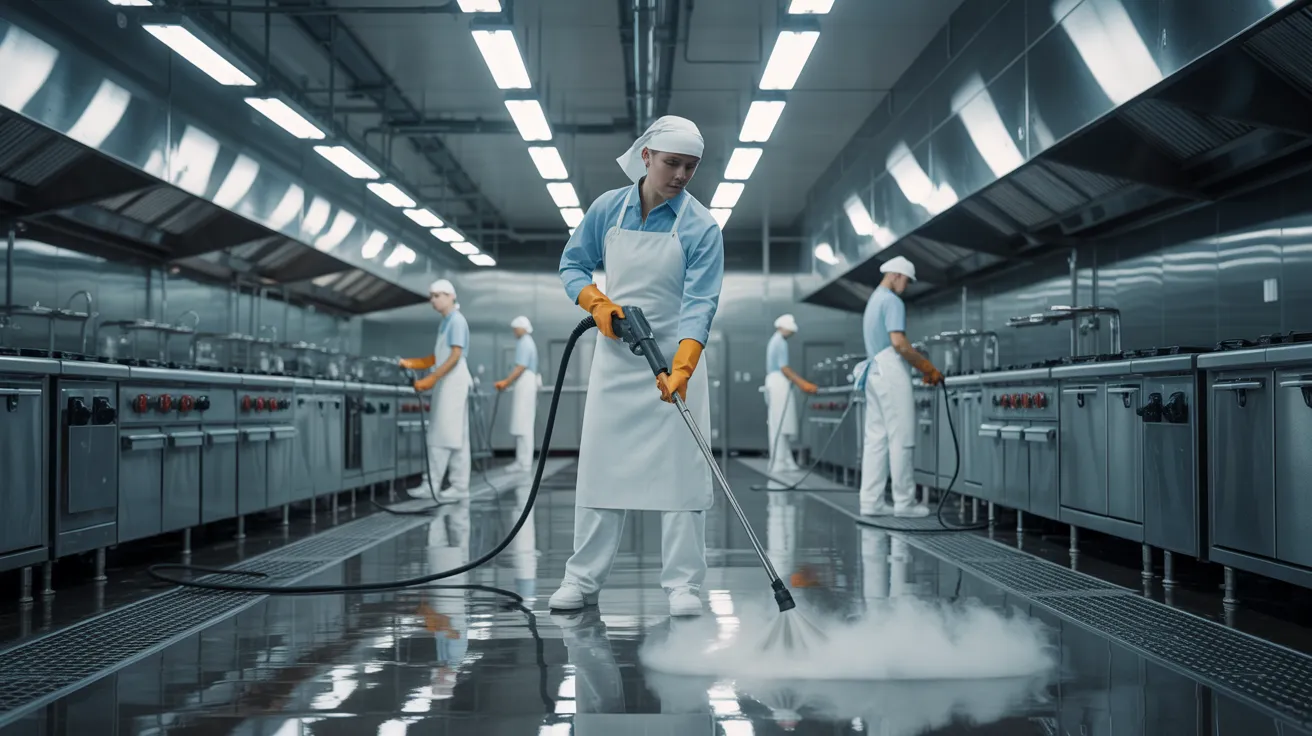
Brampton cleaning services focus on kitchens, floors, and restrooms as each zone presents different sanitation, accident, and public health concerns. In industrial kitchens, you need degreasing on cook lines, equipment exteriors, drains, prep surfaces, and splash zones to reduce contamination and pest pressure.
Floor care that is documented should also be anticipated. Technicians scrub and extract buildup from tile grout, ceramic surfaces, and vinyl floors, then apply correct drying techniques so you can reduce slip incidents and maintain code-compliant conditions. They also address entryways where moisture and debris migrate indoors.
Restroom cleaning requires decontaminating touchpoints, fixtures, partitions, dispensers, and waste containers, restocking supplies and controlling odours. They also maintain restaurant cleaning supply rooms where product storage, sink cleanliness, and drain systems impact daily sanitation standards and worker protection.
How Food Safety Cleaning Benefits Brampton Operations
Brampton operations require food-safe cleaning standards to meet compliance obligations and pass audits. You also reduce cross-contamination by cleaning and sanitizing food-contact surfaces, equipment, and high-touch areas correctly. Most importantly, you safeguard public health by lowering the risk of foodborne illness in your facility.
Food Safety Regulations
Because Brampton food establishments operate under mandatory safety protocols, food safety cleaning directly affects your ability to meet health code requirements, safeguard customers, and sidestep enforcement essential information action. You must maintain sanitized food contact points, written maintenance records, appropriate product handling, and traceable training practices that meet municipal and provincial inspection expectations.
Robust cleaning records help you to show due diligence during inspection audits and confirm your practices remain uniform, replicable, and overseen. Effective sanitation further promotes allergen reduction by reducing particles on mutual appliances and frequently touched surfaces.
Cross-Contamination Prevention
Maintaining regulatory compliance copyrights on your power to stop cross-contamination during everyday food preparation and sanitation. You must separate raw ingredients from ready-to-eat foods, sanitize prep surfaces between tasks, and position cleaning agents away from food surfaces. Explicit protocols lower contamination threats and reinforce steady regulatory adherence.
You should implement allergen segregation to keep priority allergens from contacting shared surfaces, containers, or equipment. Employ separate boards, labeled implements, and careful equipment identification so staff don't mix items throughout cooking or serving. Mandate washing hands following uncooked proteins, shellfish, egg items, or allergen products. Change cleaning rags frequently, and check disinfectant potency using test kits. When staff members receive training on these procedures every shift, you create a cleaner, safer operation that satisfies Brampton's safety standards consistently.
Community Health Protection
When food safety cleaning fails, you don't just risk a failed inspection—you increase the chance of food-related sickness impacting customers, staff, and the wider Brampton community. You also weaken your role in safeguarding community wellness, especially in busy food facilities where contamination can spread quickly through surfaces, equipment, and touchpoints.
You need sanitation procedures that eliminate contaminants, sanitize correctly, and confirm effectiveness. That requires adhering to exposure periods, using approved disinfectants, documenting schedules, and educating employees to meet regulatory standards. These controls support disease prevention by lowering microbial loads before they reach food or hands. In Brampton, strong sanitation shields at-risk groups, prevents disease spread, and enables you to show proper care. When you maintain proper standards, you don't just meet regulations—you actively reduce risk and promote secure food handling citywide.
In What Ways Does Cleaning Help Achieve Food Safety Compliance?
Upholding thorough cleaning protocols bolsters food safety compliance by reducing contamination risks, controlling pathogen growth, and keeping your facility aligned with sanitation requirements under HACCP-based programs and public health regulations. You validate that food-handling surfaces stay visibly clean and microbiologically controlled, facilitating documented preventive controls and inspection readiness.
Cleaning programs additionally fortify allergen prevention by clearing residues that can lead to undeclared allergen exposure.
What's the Best Time to Plan Commercial Cleaning?
spill incidents, and following-maintenance work
Drain systems, vents, storage racks, and hard-to-reach zones call for every week or every month service, guided by inspection results and sanitation documentation.
How Do You Choose Brampton Cleaning Experts?
Start by screening providers against food-safe sanitation requirements, not cost only. You should verify that each company understands CFIA, public health, and HACCP compliance standards relevant to your facility. Ask for proof of insurance, WHMIS compliance, documented staff training, and supervision practices. Review whether technicians understand contamination prevention, chemical handling, and traceable sanitation records.
Additionally, you need to evaluate operational reliability and responsibility. Obtain references from Brampton food operations, then review service speed, corrective-action procedures, and communication standards. Verify the company conducts supplier reviews and can deliver compliance-ready records when inspectors or external parties need proof. Verify equipment is maintained, colour-coded tools are applied correctly, and site-specific hazards are identified. A qualified provider protects compliance, product quality, and your brand reputation.
Which elements are part of a hygiene cleaning program?
Document a plan that outlines every sanitation activity, guideline, and role before production begins. You should include cleaning frequencies, approved chemicals, dilution rates, contact times, tools, and verification methods for each zone, surface, and piece of equipment. Ensure you include pre-operational inspections, corrective actions, and employee training requirements.
Your program should also cover contamination prevention, garbage management, pest control procedures, and recorded timelines for bathrooms, drainage systems, surfaces, and food-preparation zones. Detail how you'll keep raw and prepared foods apart, support ingredient tracking, and ensure accurate allergen labeling through validated cleaning between product changes. You should designate accountability, maintain signed records, and review results against regulatory standards, HACCP controls, and customer requirements. When gaps appear, update procedures immediately and retrain staff.
Popular Inquired Questions
Can cleaning services accommodate overnight shifts in Brampton facilities?
If you operate controlled facilities, you'll also require records that enable audits and ensure quality assurance.
Are hazard containment services available from Brampton cleaning experts?
Yes, you can locate Brampton cleaning professionals providing hazard containment options. They manage contamination, evaluate risks, isolate contamination, and initiate rapid cleanup to reduce risk and avoid operational impact. You should verify response rates, certifications, safety protocols, and waste procedures. If your facility must meet compliance standards, pick a provider that documents events, adheres to standards, and ensures audit compliance.
Do eco-friendly disinfectants perform safely on food-handling equipment?
Yes, natural disinfectants can be suitable for surfaces contacting food if you opt for items marked food-safe and regulatory compliant. You should check application timing, mixing proportions, and rinse protocols before application. Many natural-based solutions decrease harsh chemical exposure, but you must obtain proof of efficacy against specific pathogens. To keep surfaces residue-free, you need to follow precise manufacturer instructions and confirm the sanitizer meets food industry regulations.
Do cleaning plans permit seasonal variations?
Certainly, cleaning schedules accommodate seasonal production changes effectively. Adapt timing, labor allocation, chemicals, and validation steps to correspond with production rhythms while preserving regulatory adherence. Minimize production downtime through scheduling sanitization during changeovers, peak volumes, and usage patterns. Concurrently update standard operating procedures, instruction programs, and facility monitoring to capture transient threats, new allergens, or increased soil loads. Scheduled reviews keep the schedule functional.
Do commercial cleaners train employees on hygiene standards?
Certainly, commercial cleaners coach your staff on hygiene protocols. You obtain staff training on correct chemical practices, processing times, cross-contamination prevention, equipment disassembly, and documentation. They typically align coaching with HACCP, GMP, and CFIA or regional health bodies requirements. Many execute sanitation audits to verify compliance, uncover shortcomings, and strengthen corrective measures. This enables you to maintain consistent procedures, pass inspections, and reduce food safety risks every day.
Summary
By collaborating with Brampton food safety and commercial cleaning experts, you aren't simply tidying—you maintain your facility compliance-focused and your practices in compliance. From kitchens to processing floors, every sanitized surface and maintained corner reduces pest risk and avoids expensive losses. By scheduling cleanings at appropriate intervals and following a documented cleaning plan, you secure staff members, clients, and your credibility. In a heavily controlled environment, hygienic conditions are mandatory—they're key to business compliance.
Comments on “Brampton Workplace Sanitation”